Legacy · Thermal validation
Homogeneous material
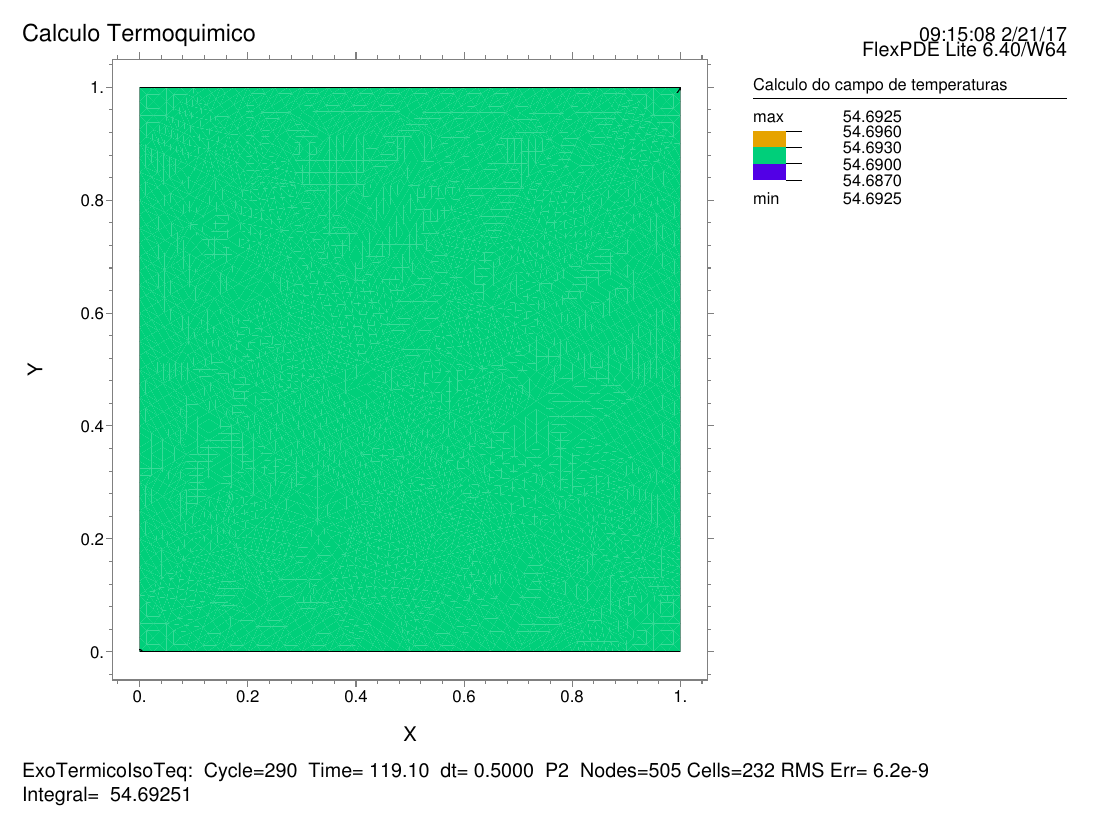
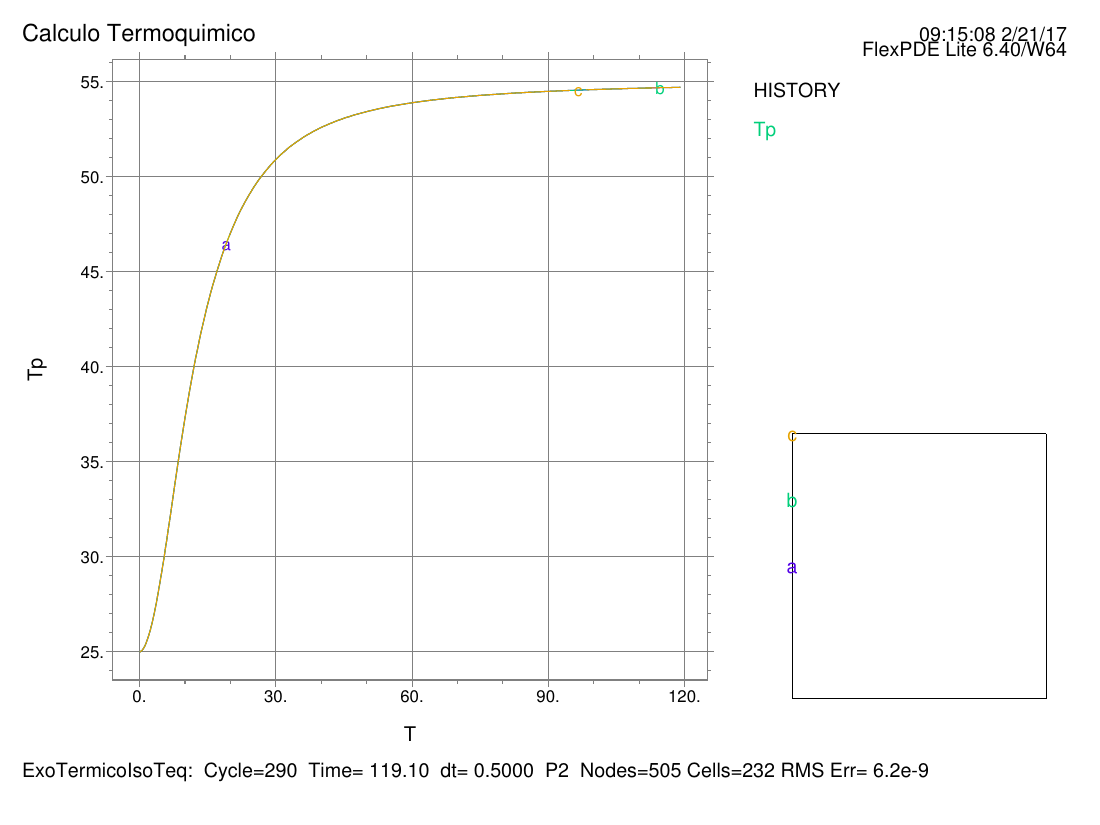
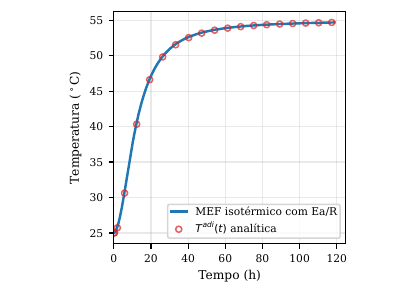
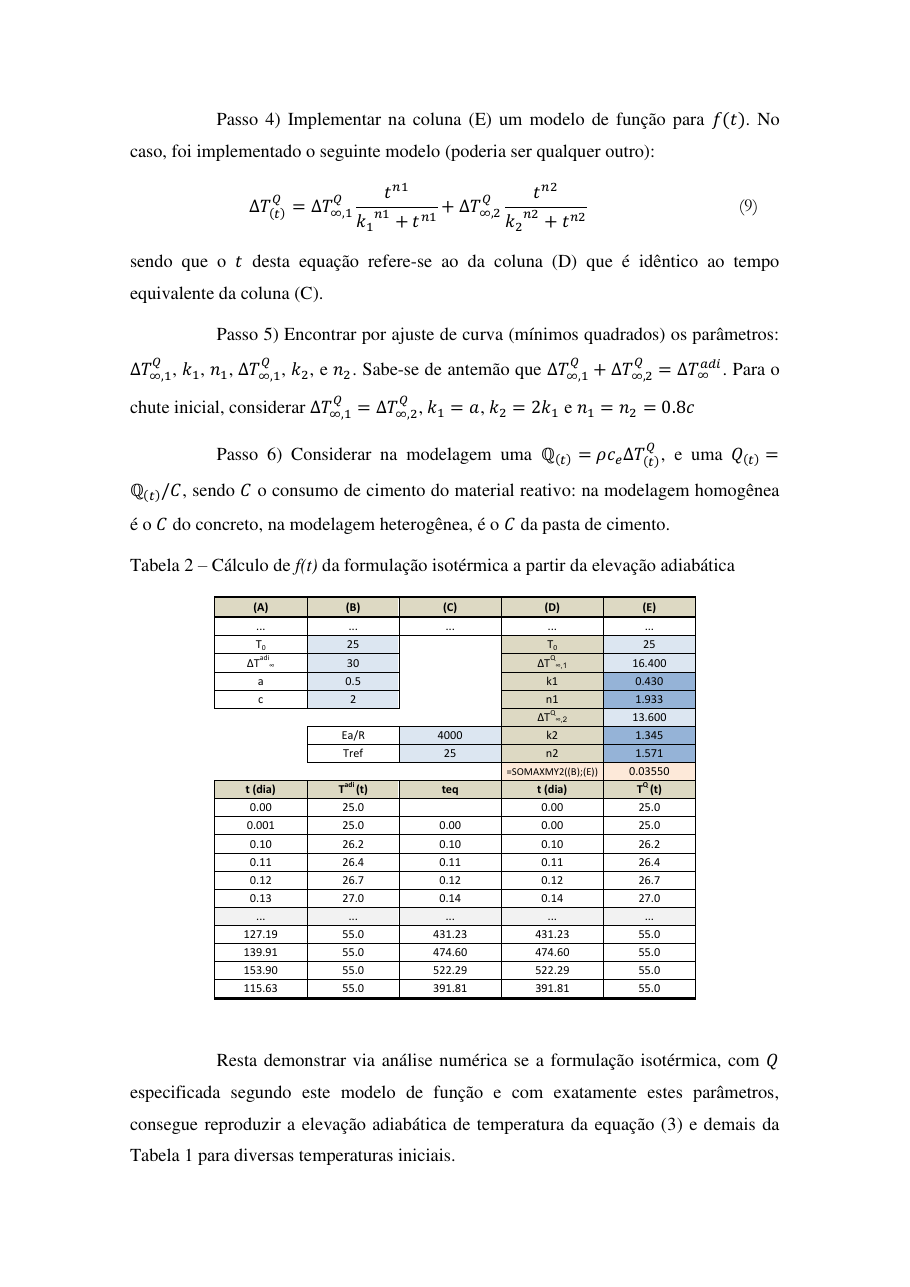
A body, insulated on the whole boundary. The isothermal formulation, with the below, must return the analytical adiabatic rise. Temperature stays uniform.
Paper: Analytical and numerical validation of the thermochemical problem of early-age concrete · DOI 10.70271/rirc.v1n2a008
Input data
| Item | Value |
|---|---|
| Geometry | square |
| Boundary | on every edge |
| Adiabatic rise | , in hours |
| Series horizon | to , step |
The source imposed on the model is isothermal, two Hill terms, with in hours:
. The sum is the of the adiabatic curve.
Reference result
Tmax_C in the series is the analytical adiabatic temperature. The body is uniform, so any point is the maximum. Q_kJ_kg is the isothermal generation at the equivalent time integrated along that temperature.
| (h) | (°C) | (°C) |
|---|---|---|
| 12 | 40.00 | 15.00 |
| 24 | 49.00 | 24.00 |
| 480 | 54.98 | 29.98 |
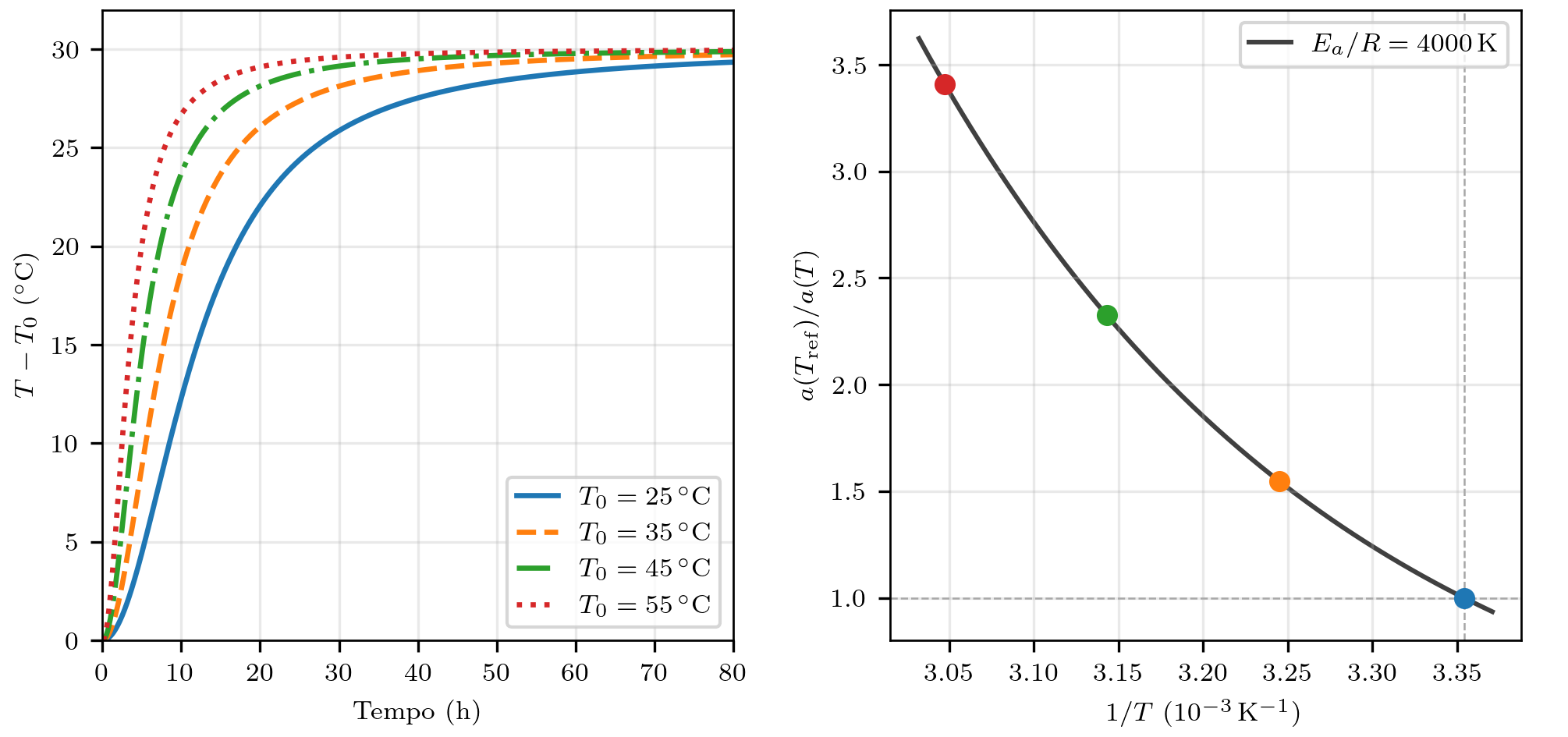
Check a uniform field and this history. The report does not publish an RMSE for this body. The comparison is the analytical–numerical figure.
Series t × Tmax × teq × Q(t)
With and , runs ahead of as the temperature rises.
Report figures