Legacy · Thermal validation
Paste scale
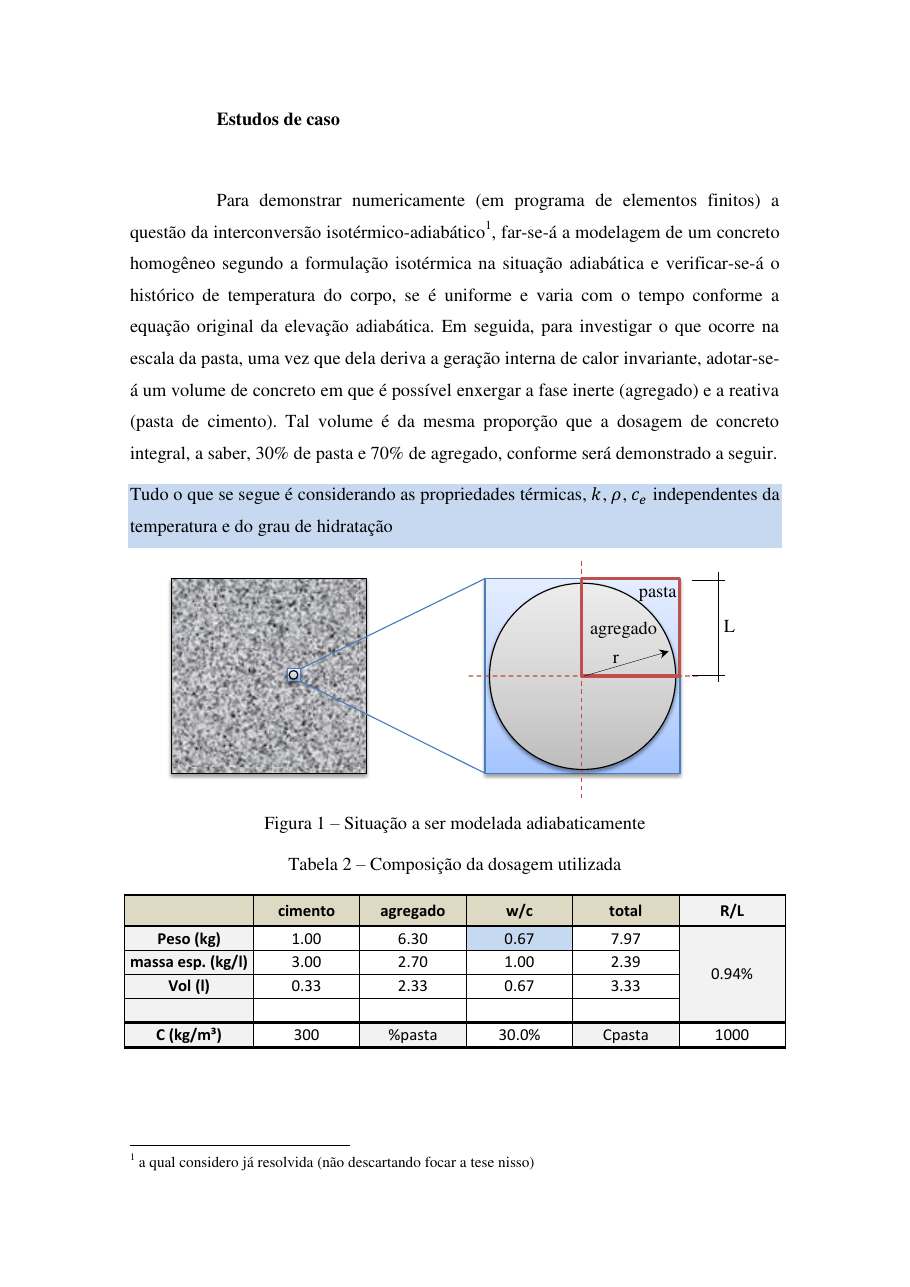
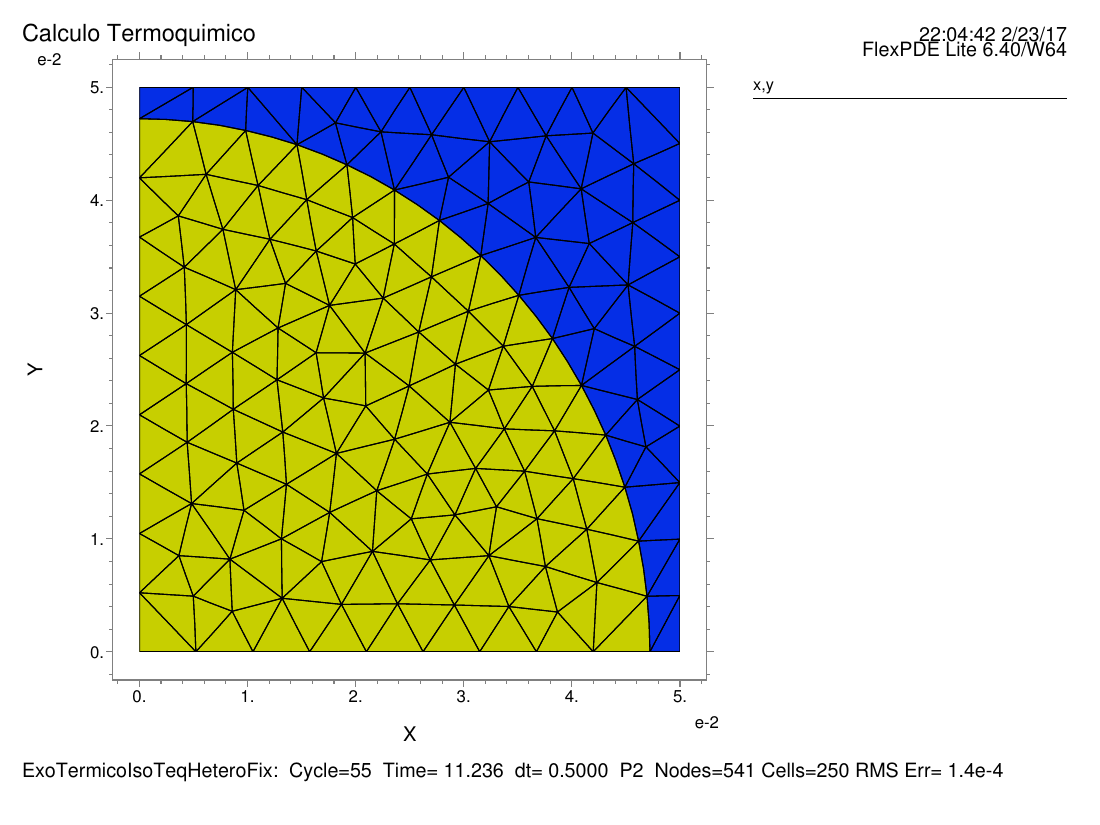
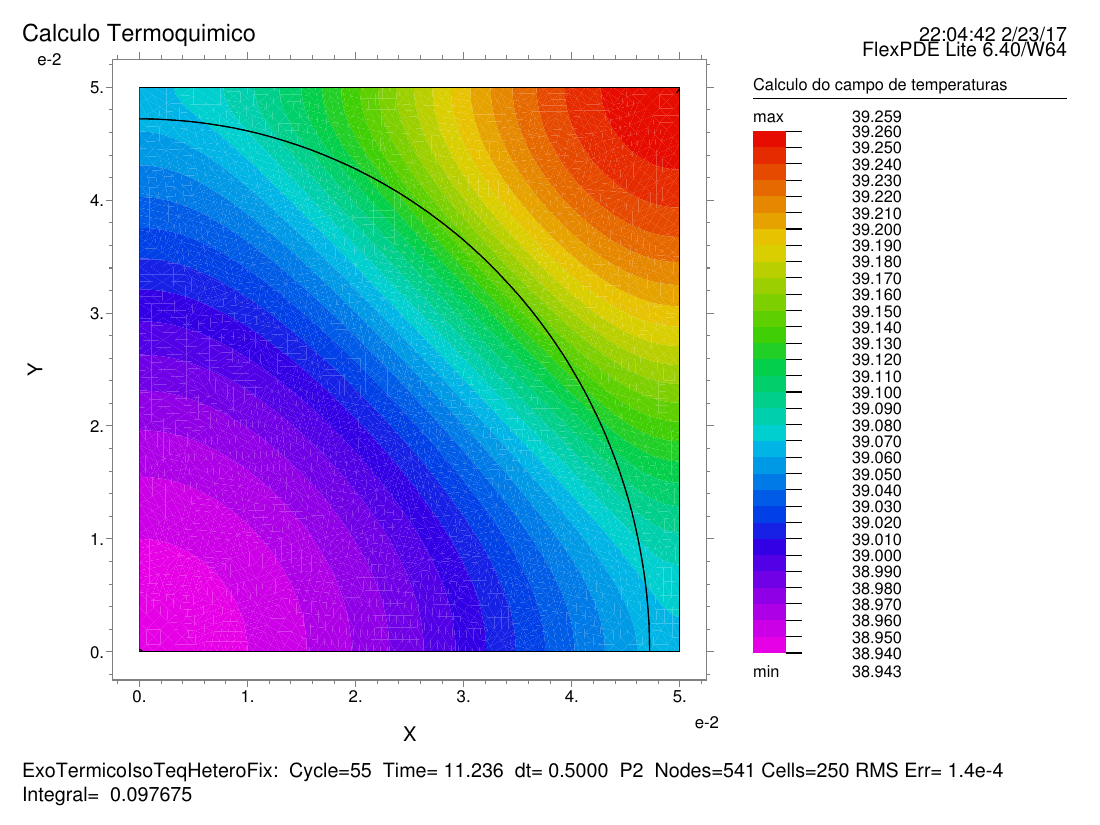
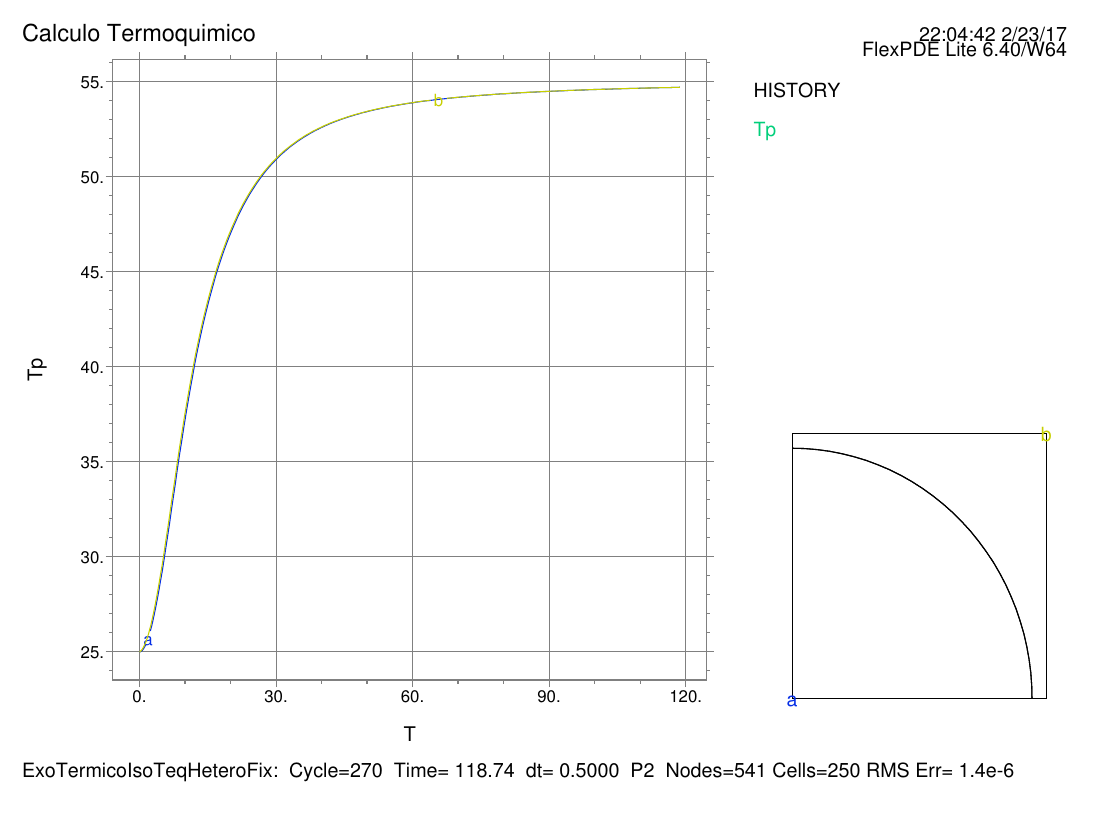
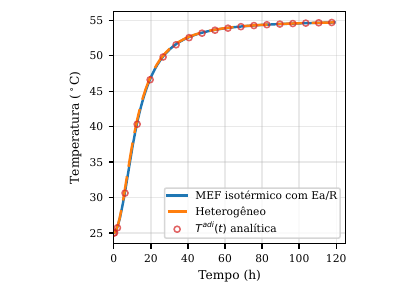
Same as the homogeneous material, with no recalibration of . Heat is generated only in the paste. The aggregate is inert. Mean temperature must match the adiabatic rise of the homogeneous concrete ().
Paper: Analytical and numerical validation of the thermochemical problem of early-age concrete · DOI 10.70271/rirc.v1n2a008
Input data
| Item | Value |
|---|---|
| Unit batch | cement ; aggregate ; |
| Specific mass | cement ; aggregate ; water |
| Concrete | |
| Paste fraction | |
| Paste | |
| Cell | square of side |
| Aggregate | radius (about on the reference diameter) |
| Boundary | adiabatic |
| , , | , , |
| the same two Hill terms as the homogeneous case |
is an upper bound on the conduction path, not a field mix. The report does not split , and between paste and aggregate in this section. What is closed is the mix, the geometry, the single and the two temperature checks below.
Reference result
| Check | Value in the report |
|---|---|
| Mean temperature | matches the homogeneous adiabatic rise |
| does not exceed | |
| Where the difference occurs | only on the rise, at the highest rate |
| At the peak and on cooling | uniform field |
The report has no pointwise series of that difference. The file below is the mean temperature the heterogeneous model must recover. The marks , and the tail at are those of the homogeneous case.
Series t × Tmax × teq × Q(t)
Tmax_C here is the reference mean temperature, not the paste core. teq_h uses and along that mean. Q_kJ_kg is the homogeneous generation ( in ). In the model that is applied in the paste; the aggregate generates no heat.
Report figures