Legacy · Thermal validation
Infinite slab, four routes
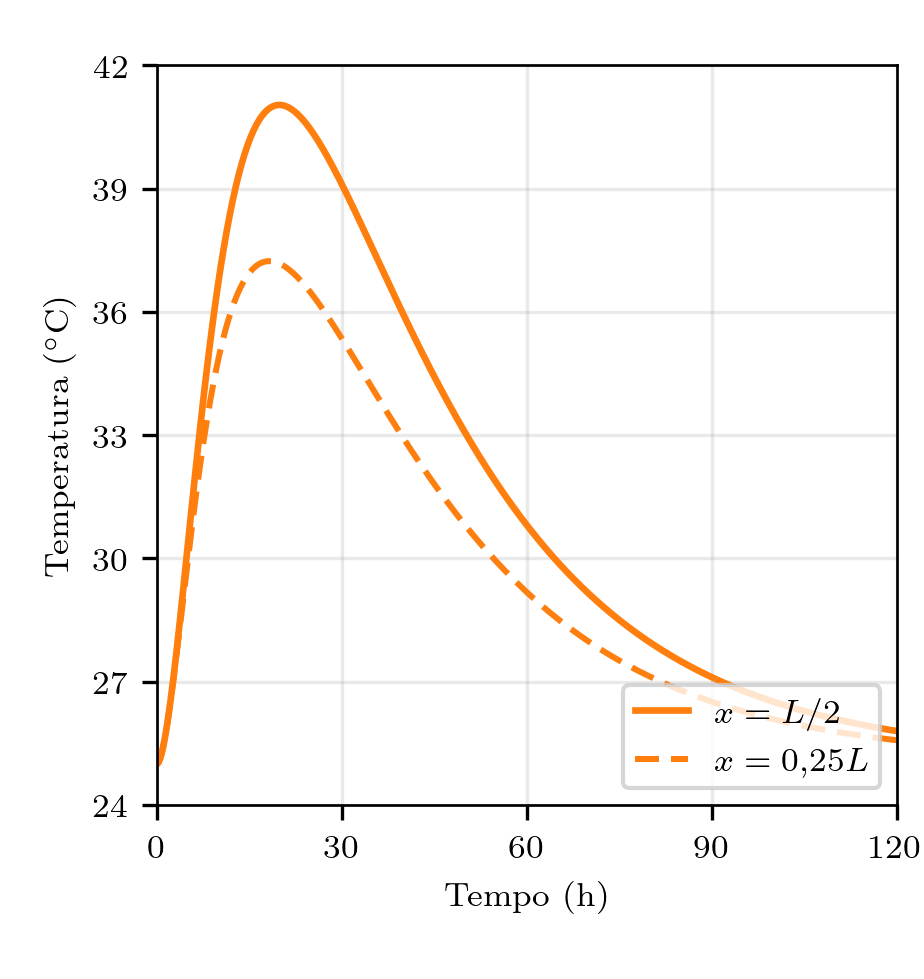
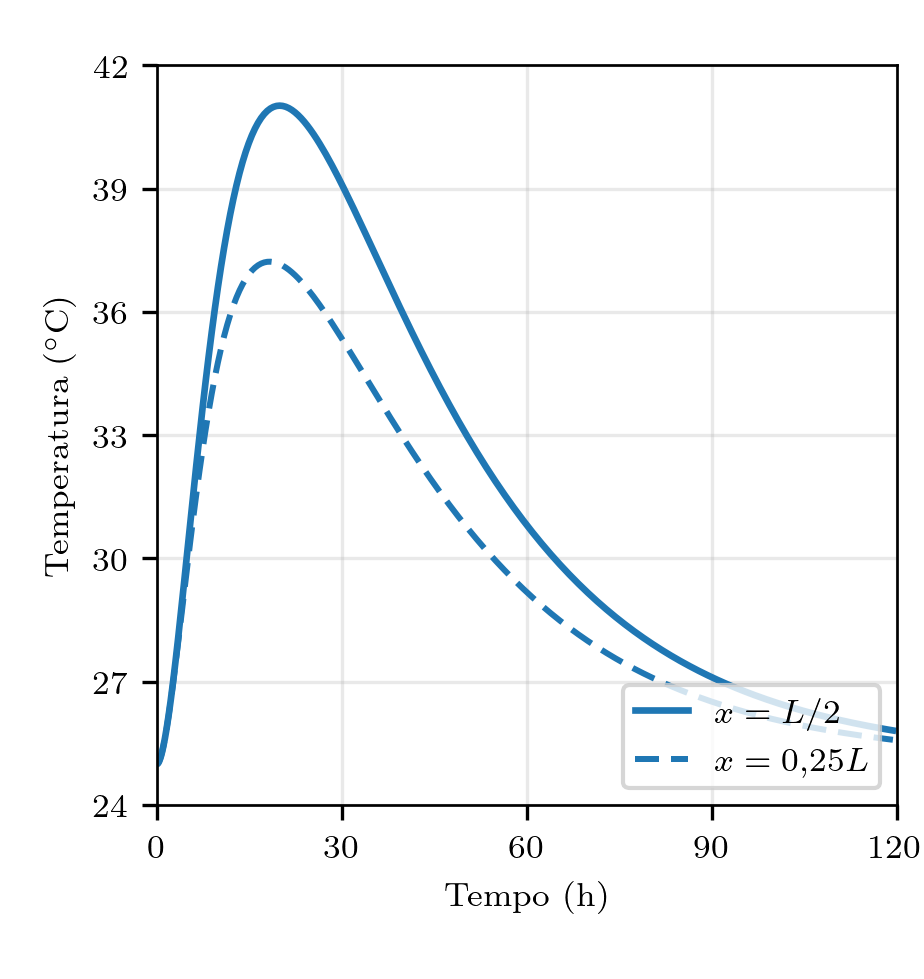
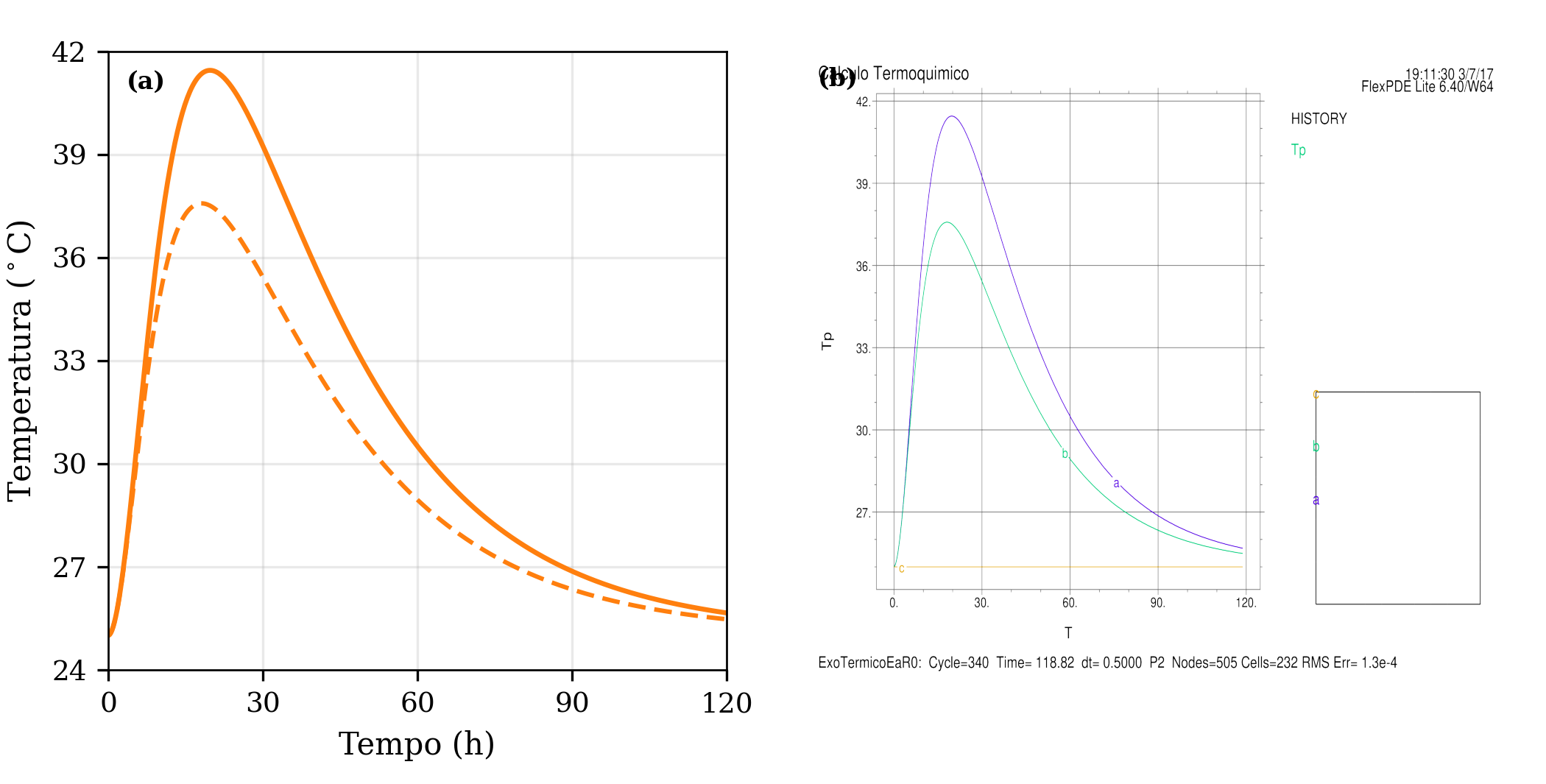
Slab thickness , , reading at . Four calculations with the homogeneous-interconversion material.
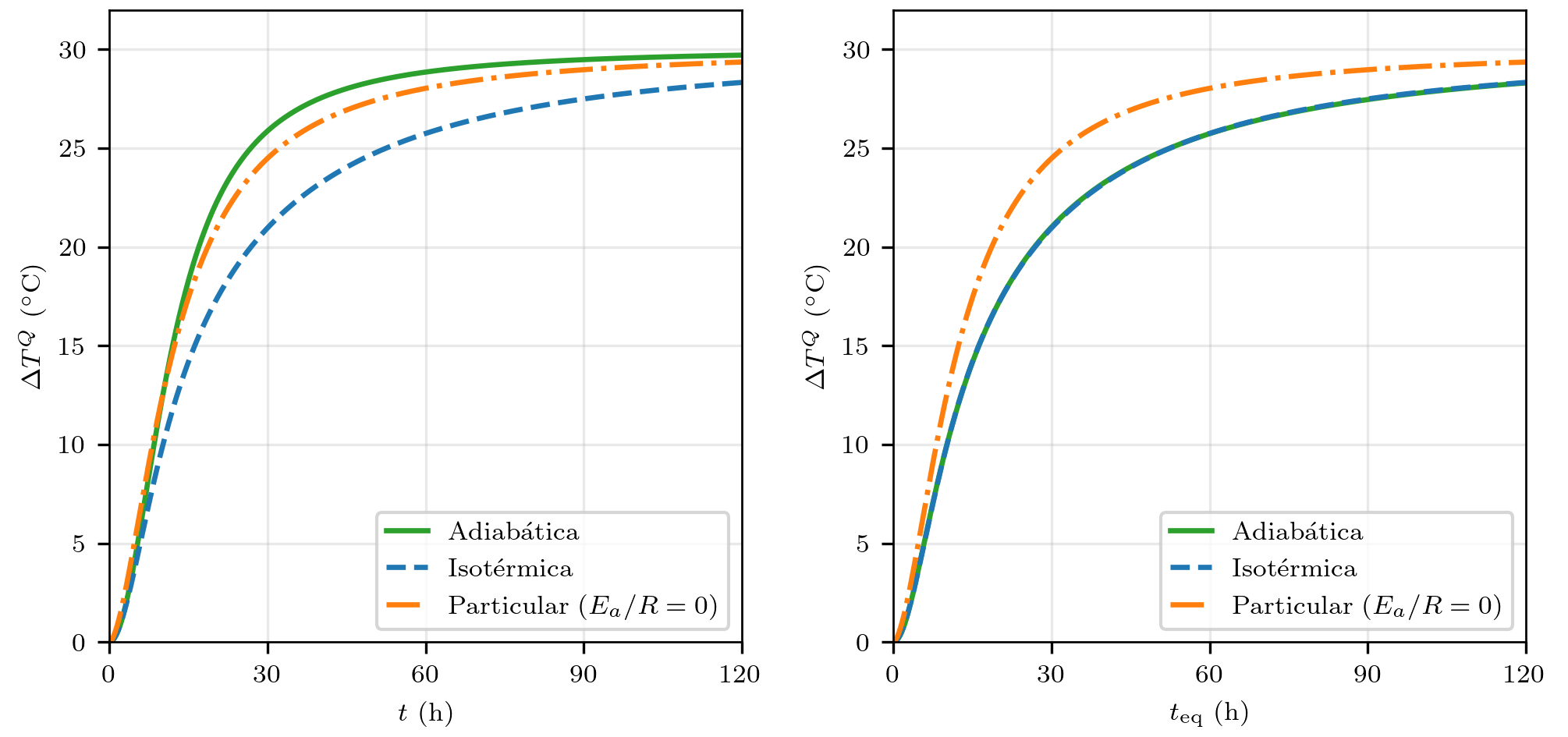
- FEM, adiabatic formulation, .
- FEM, two-term isothermal formulation, the same as the homogeneous material.
- Particular curve taken at the point, with .
- Analytical infinite-slab solution with that particular curve.
Paper: Analytical and numerical validation of the thermochemical problem of early-age concrete · DOI 10.70271/rirc.v1n2a008
Input data
| Item | Value |
|---|---|
| Monitor point | (column 0,0.5 in the FEM histories) |
| Particular curve | , , , |
| Fourier modes | to |
The particular curve keeps the amplitude at . Parameters and absorb the history at the point and the lack of thermal activation in the analytical equation.
Reference result
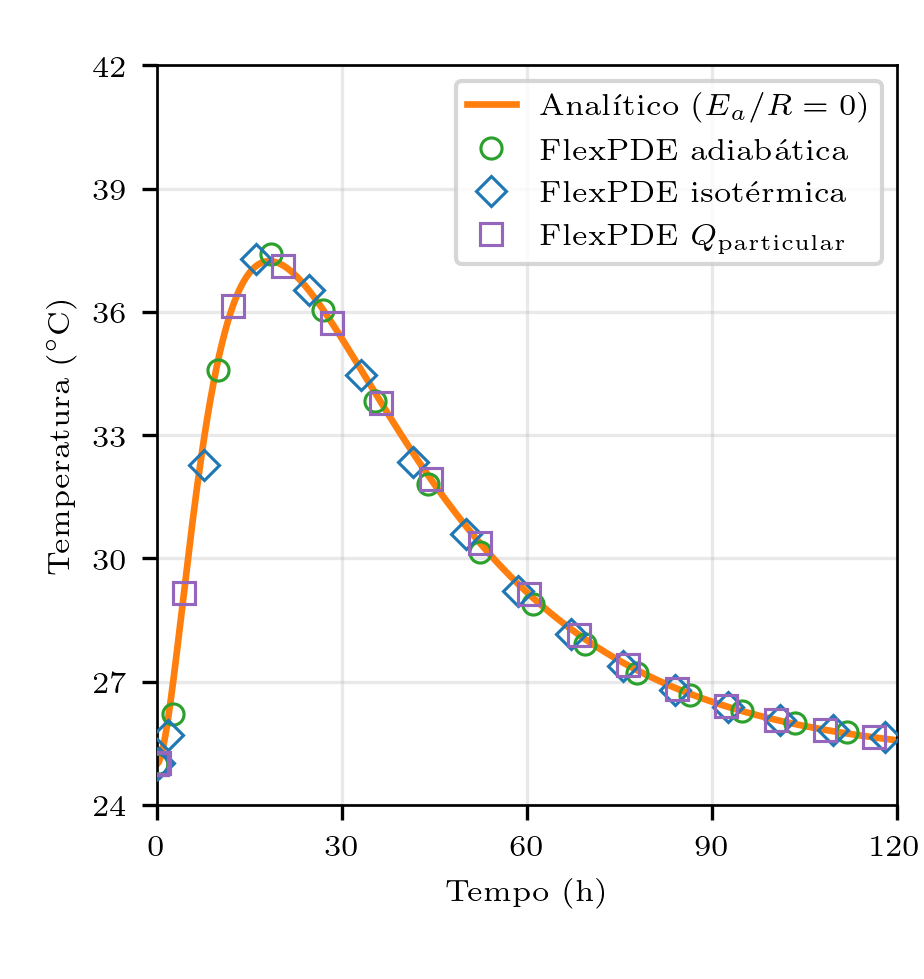
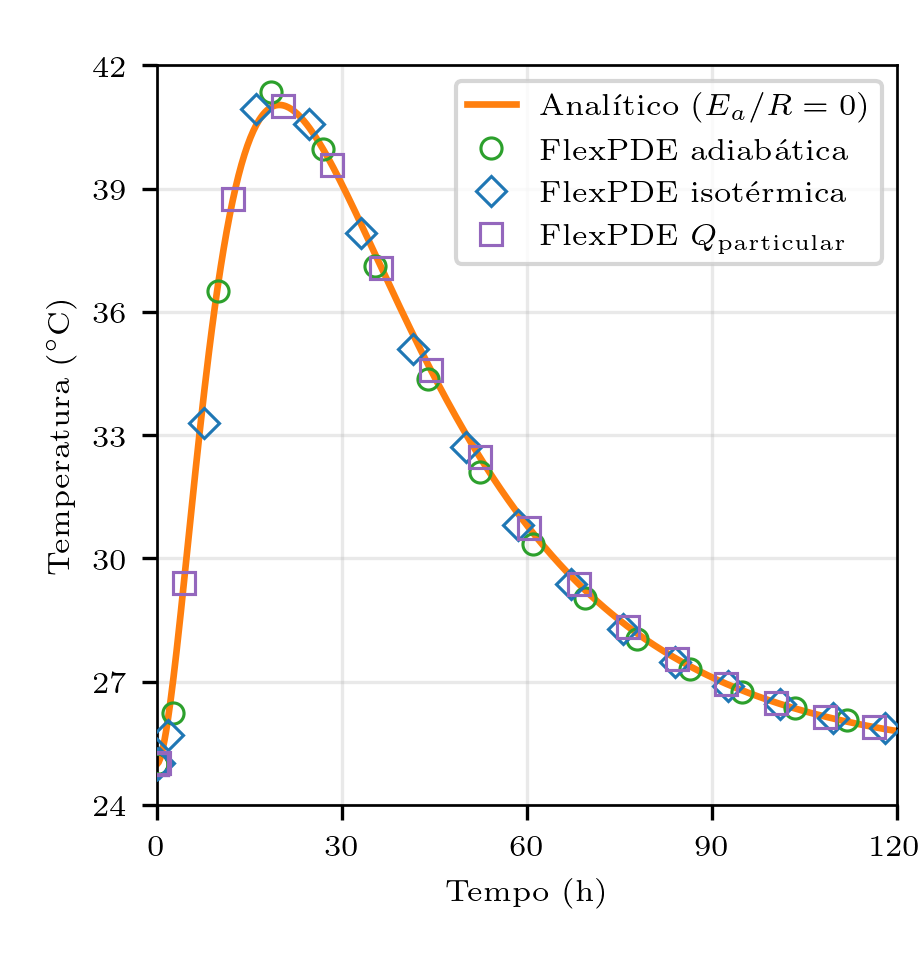
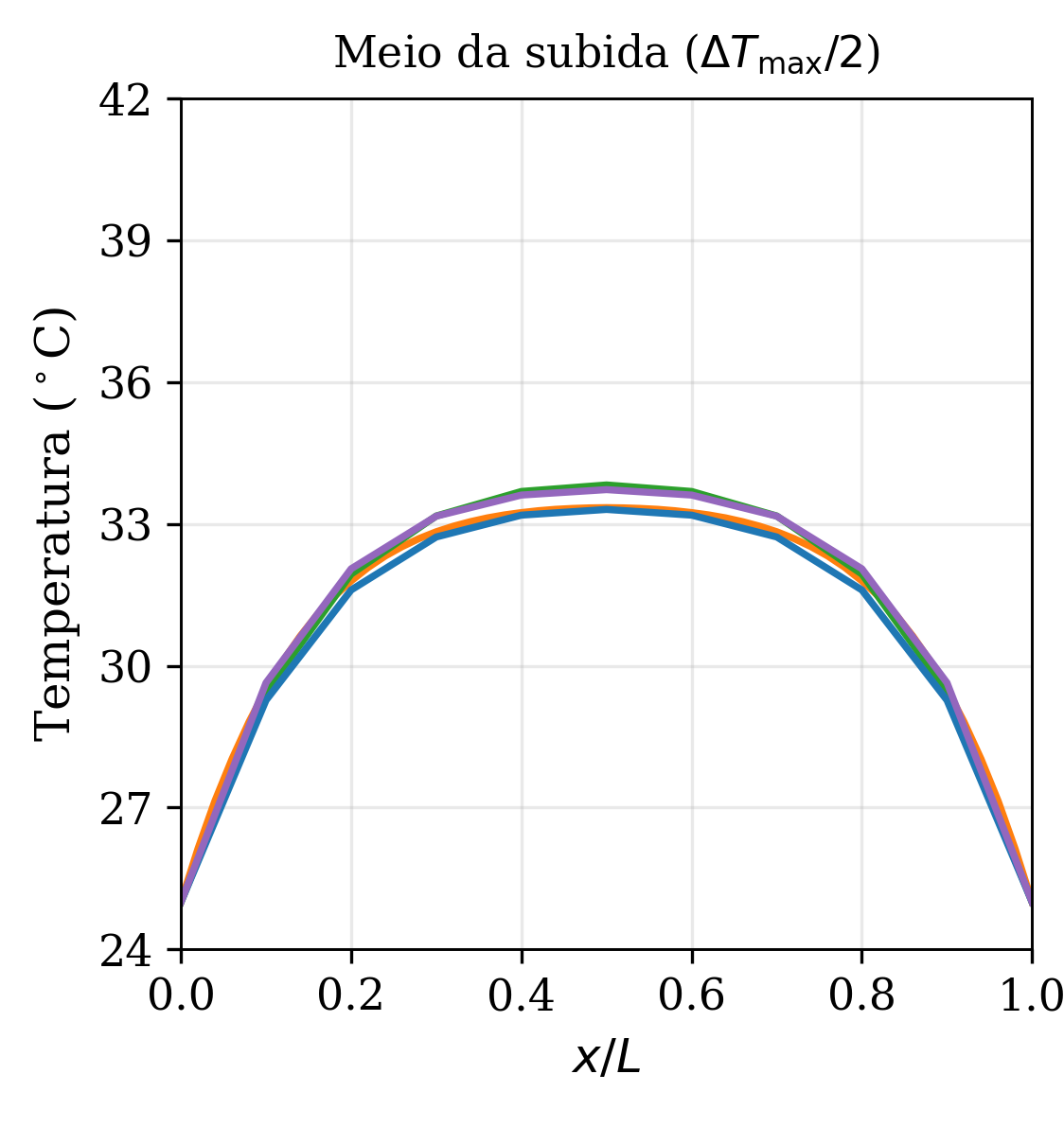
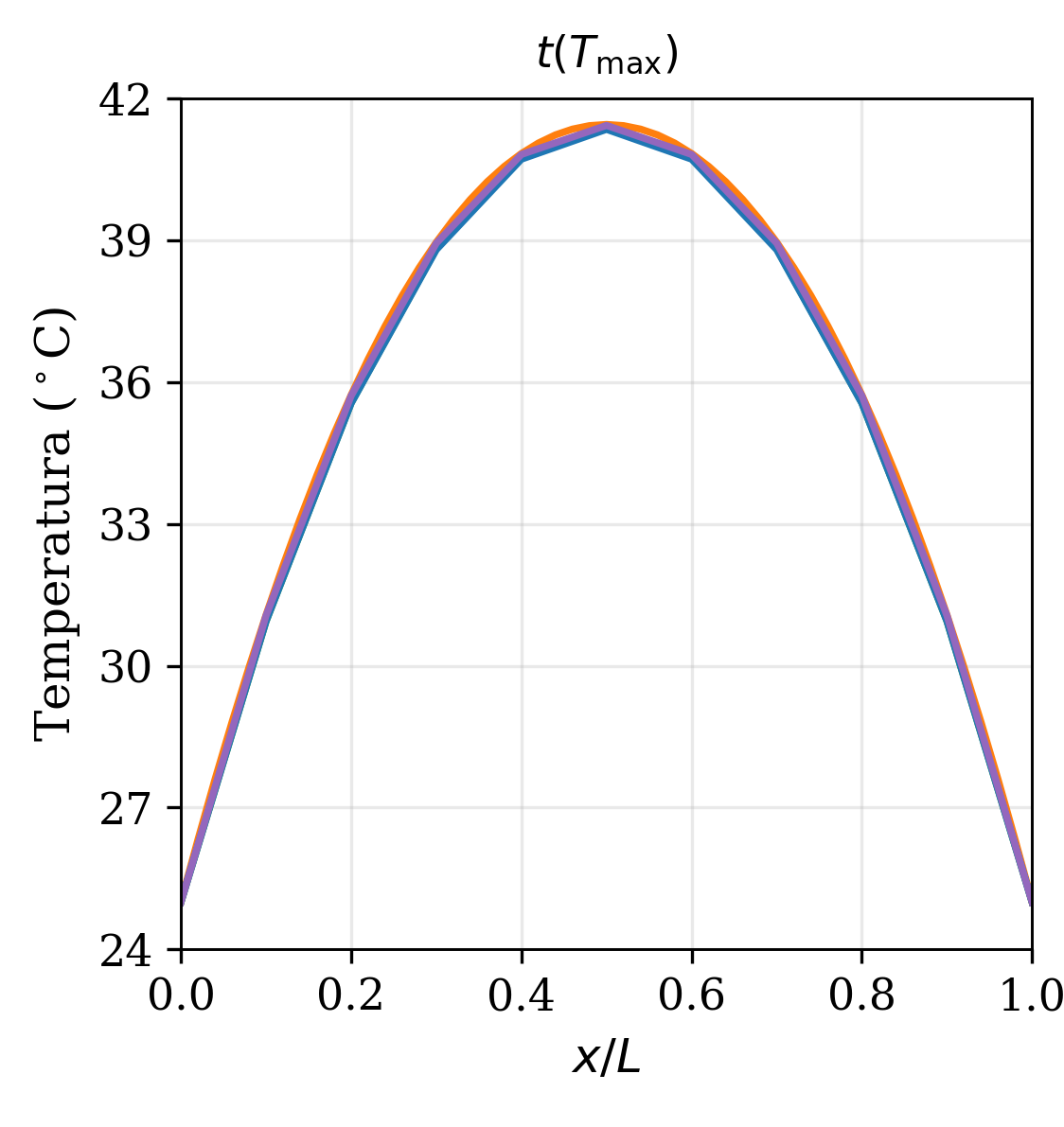
Peak temperatures at mid-depth, read from the series on this page:
| Route | (°C) |
|---|---|
| Isothermal FEM | 41.35 |
| Adiabatic FEM | 41.38 |
| Analytical, particular curve | 41.04 |
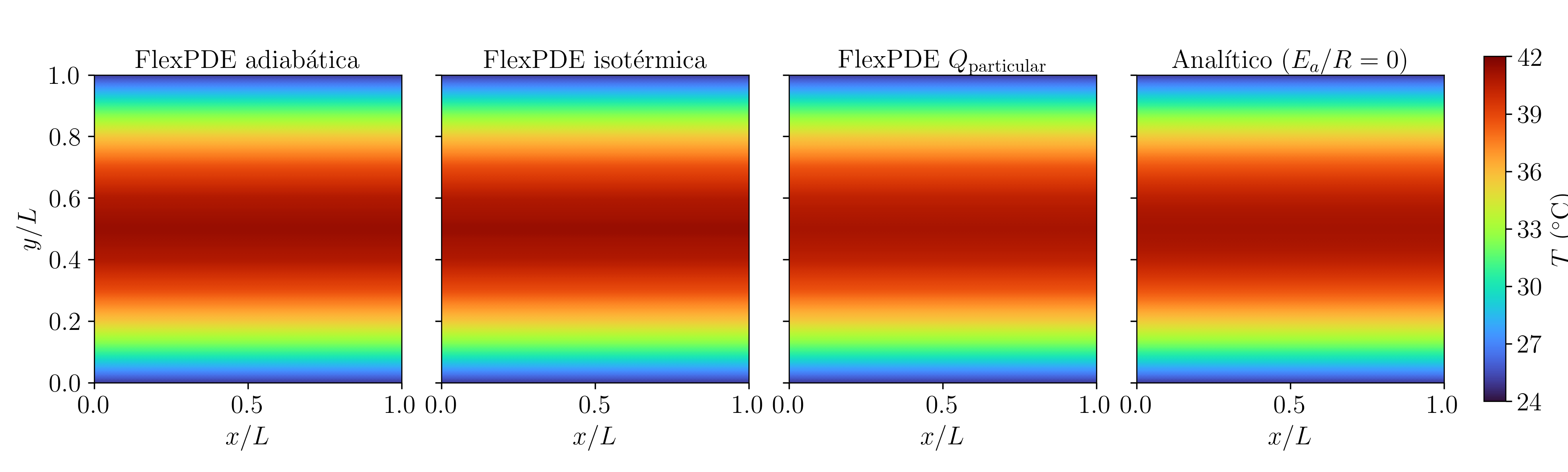
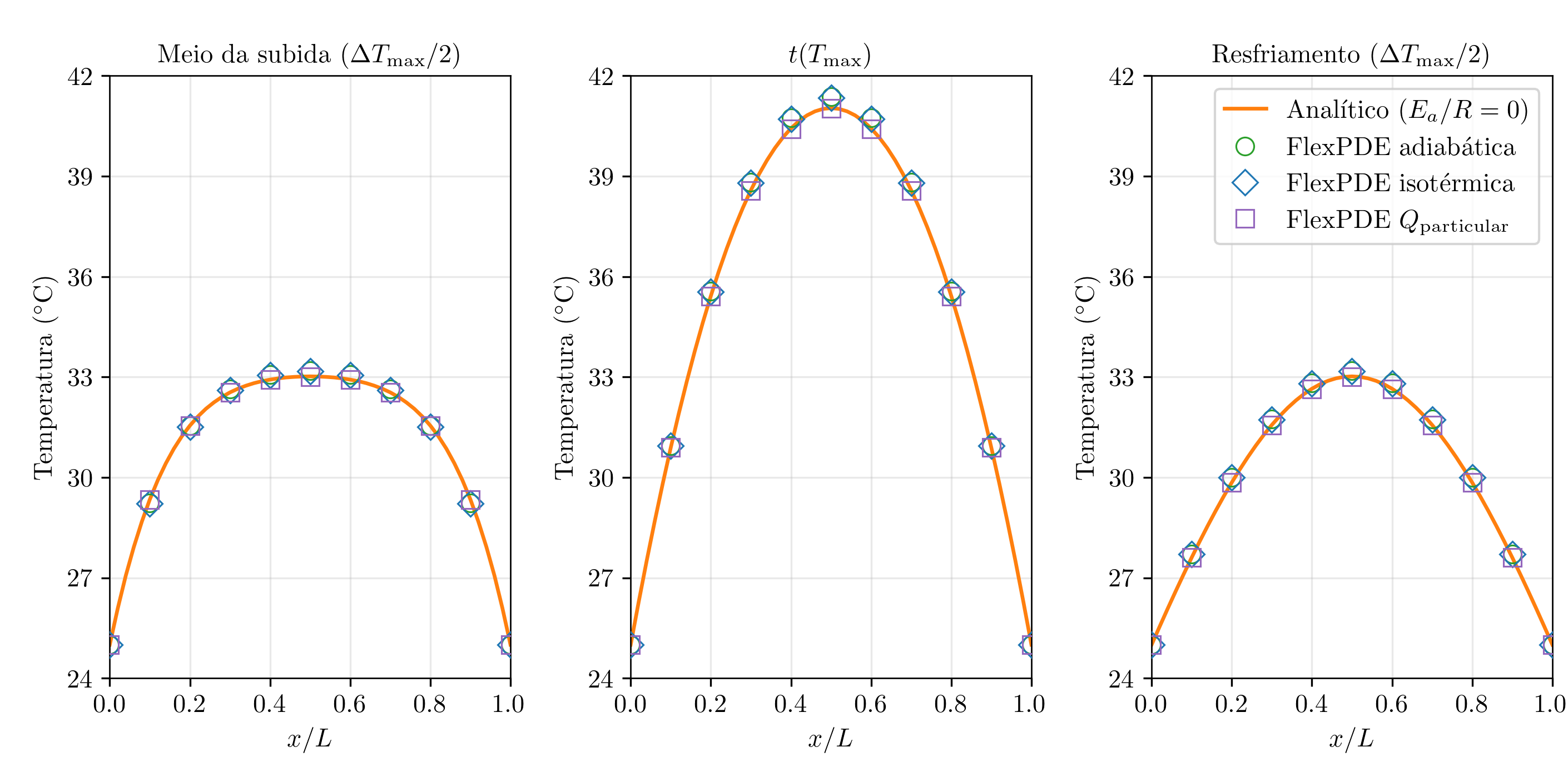
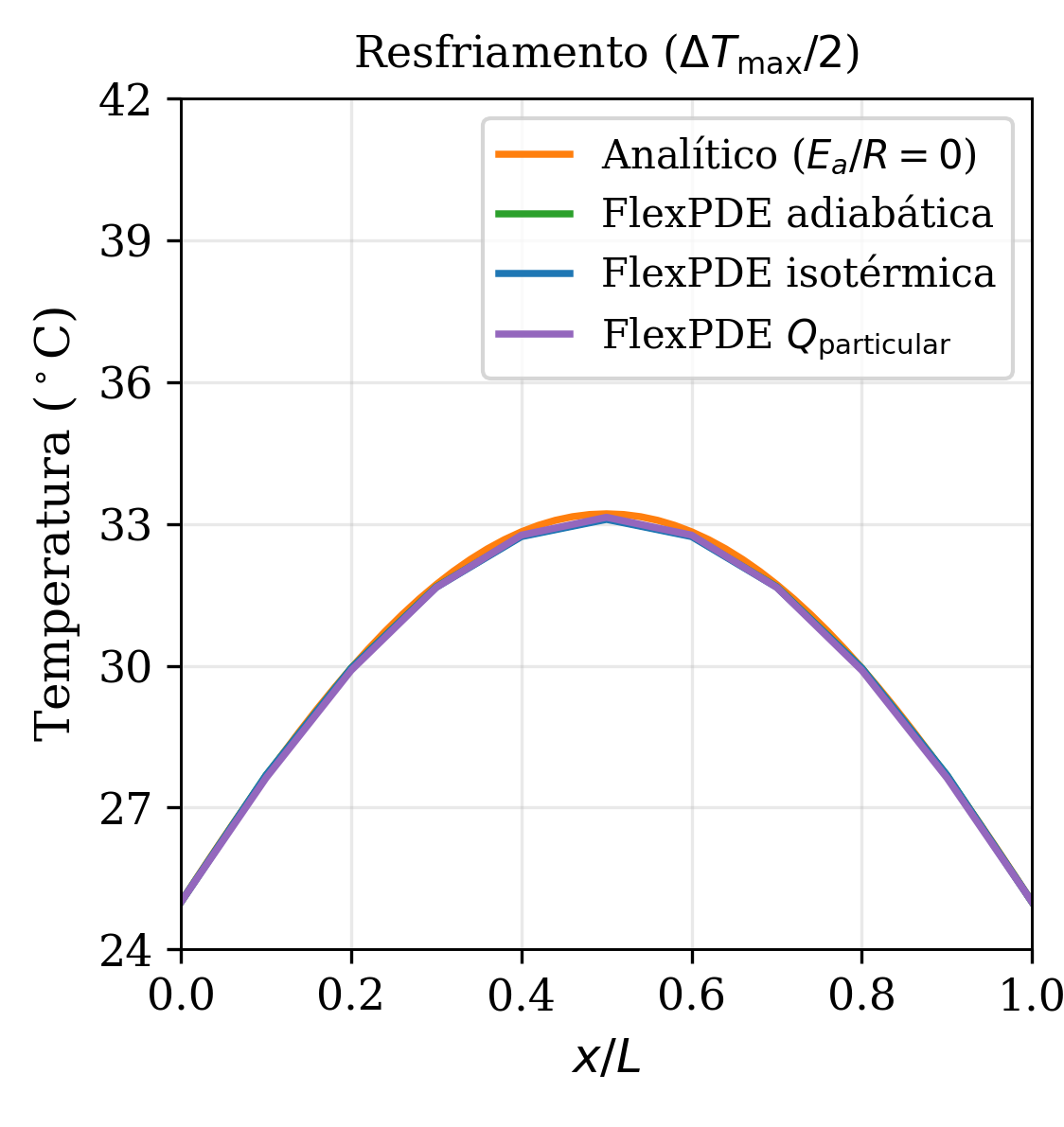
The report shows the four routes on the figure and does not publish an RMSE for this slab. Comparing the series on this page, the isothermal route against the analytical solution has RMSE (maximum absolute difference about ). The adiabatic route has RMSE (maximum absolute difference about ).
Series t × Tmax × teq × Q(t)
In the first two files, Tmax_C is the FEM value at point 0,0.5, teq_h uses and Q_kJ_kg is the two-term isothermal generation.
In the particular file, Tmax_C is the analytical centre temperature, teq_h and Q_kJ_kg comes from the particular Hill law (, , ).
Spatial histories from the report, for checks at other depths: IsoTeq, FormAdi, Qparticular and analytical centre and .
Report figures